Embracing ECEC Values As Resistance Live Series
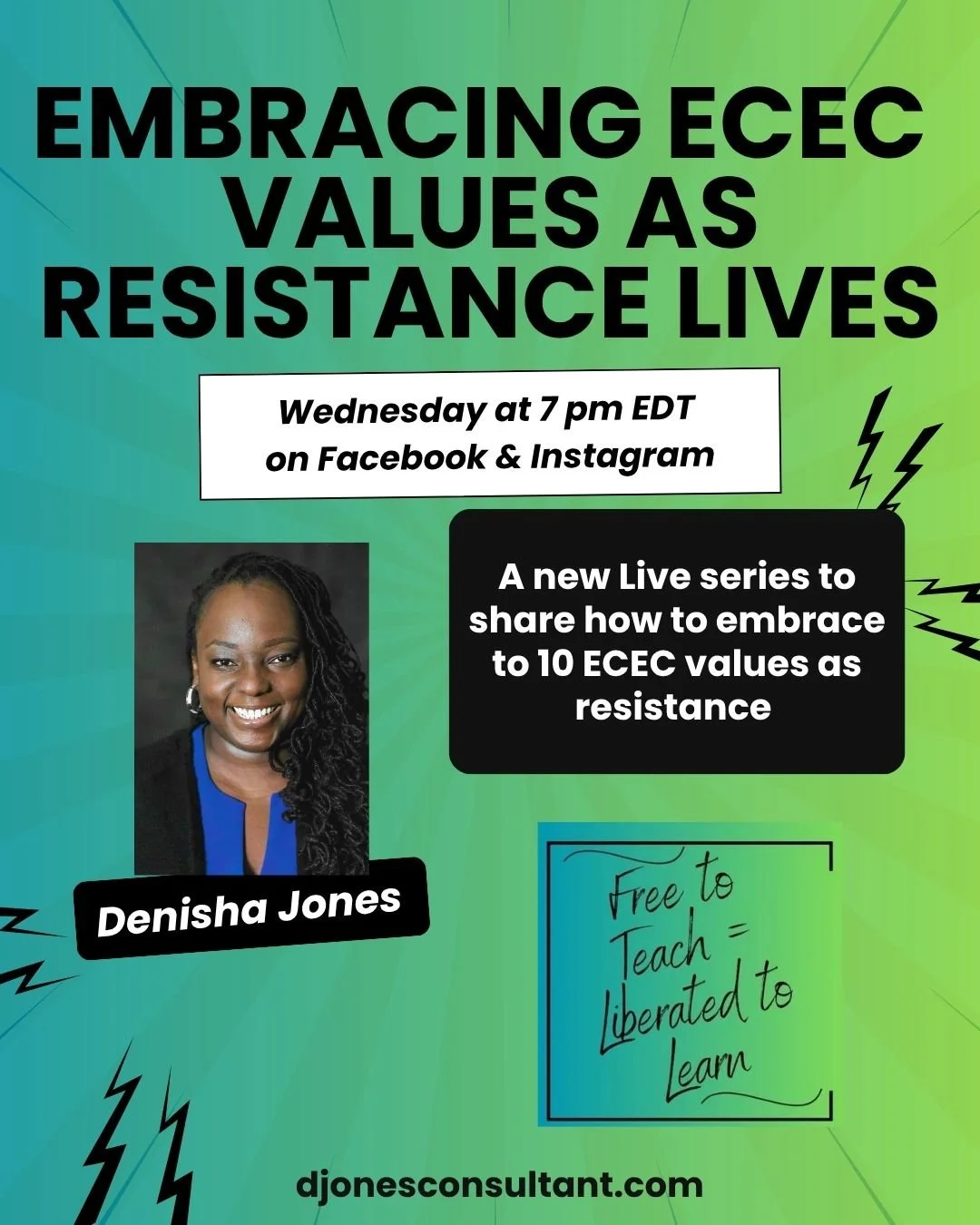
A new live series to explore how to embrace professional early childhood education and care values as resistance!
When I saw the call for editors for special issues of the Global Education Review shared in a group for early childhood educators and researchers, I immediately thought about how we can lean into early childhood values and principles, such as child development, free play, open-ended inquiry, child-driven curriculum, etc., to resist the growing neoliberalism and fascism threatening to take over public education. It was December 2024, and we were preparing for a second Trump administration, which we knew meant an escalation in the ongoing attempts to silence educators teaching for truth, equity, and justice. The CRT boogeyman had been unleashed, causing many states to enact legislation banning teaching about the history of racism and supporting LGBTQ students. As college students led a national protest movement against the genocide in Gaza, they were met with violent police attacks and criminal persecution by university officials. It was clear that education, as the practice of freedom, would continue to face attacks from those who seek to maintain the status quo of education as colonization.
As I thought about drafting the call for papers, I was drawn to the famous Robert Fulghum quote: “All I really need to know about how to live and what to do and how to be I learned in kindergarten.” When I became a kindergarten teacher, I had a framed print of the quote hanging in my classroom.
As I reread his words, I was reminded that it is our early childhood education and care (ECEC) values that we must hold on to as a form of resistance to an uncertain future, sure to be full of challenges. In the call, I rewrote Fulghum’s words to All We Really Need to Know to Face the Future Comes from Our ECEC Values, noting that in times of uncertainty, our commitment to ensuring a just and equitable early childhood experience for all children must remain steadfast. When the future threatens to reshape our world, our shared values can ground us in what all children fundamentally need and deserve.
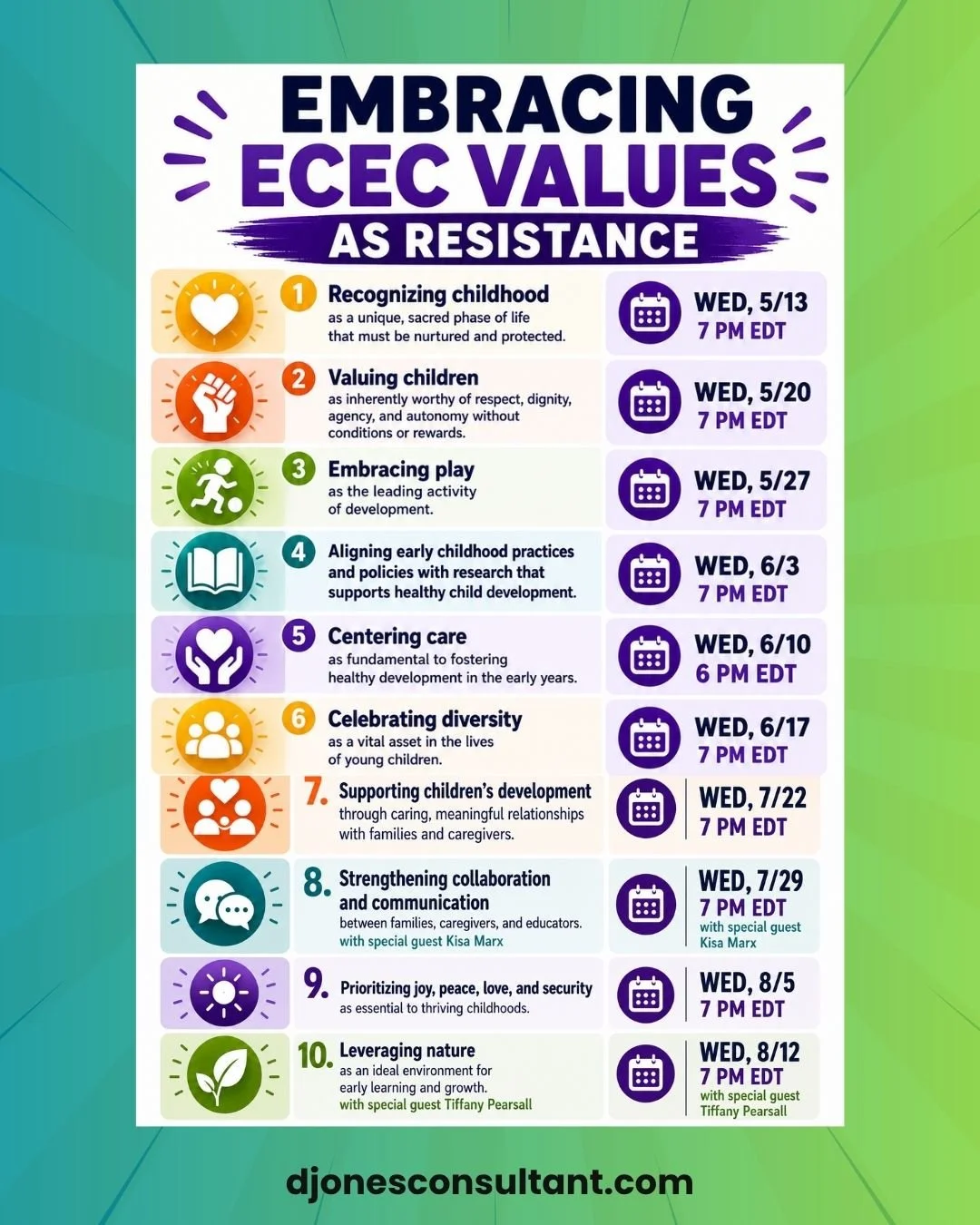
I listed the following 10 foundational ECEC values for authors to consider when submitting a proposal.
Recognizing childhood as a unique, sacred phase of life that must be nurtured and protected.
Valuing children as inherently worthy of respect, dignity, agency, and autonomy, without conditions or rewards
Embracing play as the leading activity of development (play is learning).
Aligning early childhood practices and policies with research that supports healthy child development.
Centering care as fundamental to fostering healthy development in the early years.
Celebrating and affirming diversity as a vital asset in young children's lives.
Supporting children’s development through caring, meaningful relationships with families and caregivers.
Strengthening collaboration and communication between families, caregivers, and educators.
Prioritizing joy, peace, love, and security as essential to thriving childhoods.
Leveraging nature as an ideal environment for early learning and growth.
As I thought about what a just and equitable early childhood education for all children truly meant, these are what came to mind. And I wanted to hear from other early childhood educators and researchers about how these values show up in our work, help us navigate today’s challenges, and prepare us for those on the horizon.
We published the first of two issues in this special volume in April of 2026, and you can read the four articles and editorial here. The second issue was published in July of 2026, and you can read those four articles and the editorial here.
One way for teachers to engage in resistance is to embrace professional values of early childhood education and care. When we lean into our values, we develop a philosophy that clearly articulates what we know young children need and bolsters our commitment to enacting those values every day. Embracing ECEC values as resistance is a framework that I use to ensure that I work in alignment with what I know is right. It is how I repair the moral injury from being required to engage in practices and policies that are not based in child development.
To support you in resisting harmful policies and mandates, I’m launching a new Live Series: Embracing ECEC Values as Resistance. Each Wednesday at 7 pm EDT/4 pm PDT, I will go live on Facebook and Instagram to share my professional ECEC values and my framework for embracing them as a form of resistance.
Join me for a live discussion to explore each value and a four-step framework for value-based advocacy!
Did you miss any of the lives? Find the recordings below.